
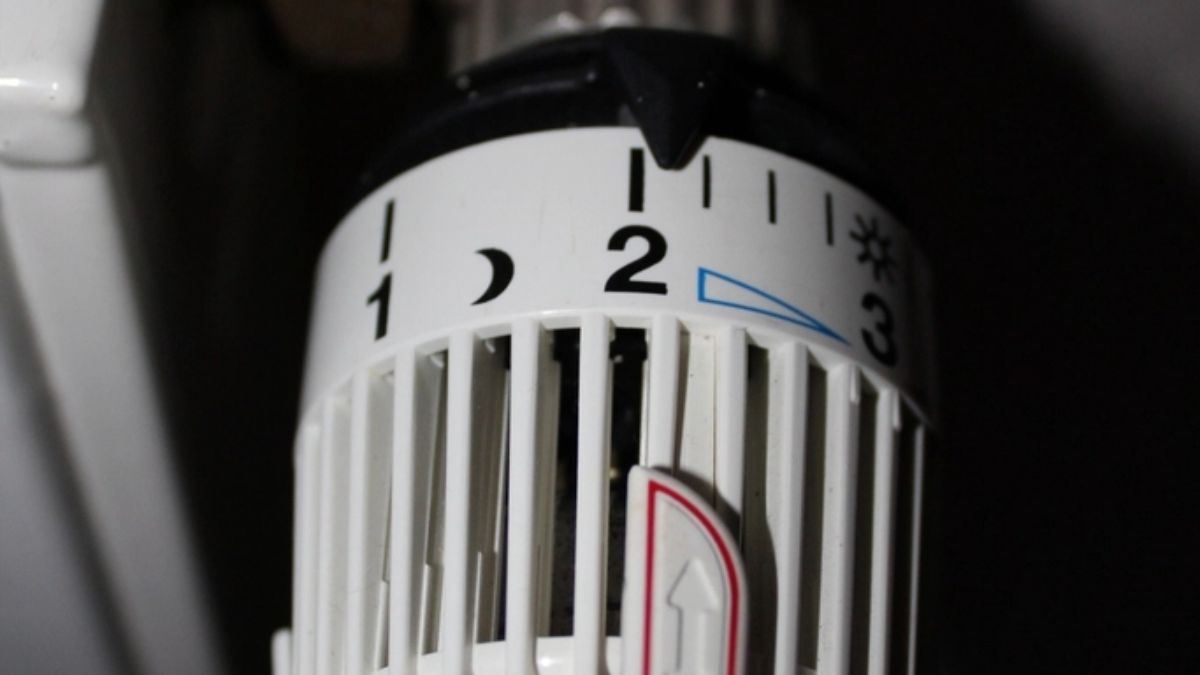
Quick answer: The US Department of Energy suggests about 68°F (20°C) in winter while you are awake at home and 78°F (26°C) in summer, then turning the thermostat back 7 to 10°F for 8 hours a day while you sleep or are out. That setback can save up to 10% a year on heating and cooling.
Every degree closer to the outdoor temperature means your heating or air conditioning works less. The trick is to save where it does not hurt: when you are asleep, out, or in a room you do not use.
Recommended settings
| Season | At home, awake | Asleep or away |
|---|---|---|
| Winter (heating) | 68°F / 20°C | 7 to 10°F lower |
| Summer (cooling) | 78°F / 26°C | Higher, or off |
In the UK, the UK Health Security Agency advises heating the rooms you use to at least 18°C in cold weather, especially for older people, babies and anyone with health conditions.
Why a setback saves money
A home loses heat faster the warmer it is compared with outside. Keeping it cooler for 8 hours means less heat lost, and so less energy to replace. Reheating takes some energy, but less than keeping the home warm the whole time. The same logic applies to cooling in summer. See heating on all day or on and off.
When to be careful
- Heat pumps: large setbacks can trigger backup electric heat, which costs much more. Use small setbacks or a heat pump-aware thermostat. See why winter bills rise.
- Humid climates: letting the home get very warm in summer can raise humidity; moderate setbacks work better.
- Vulnerable people need a warm home; never cut heating to the point of risk.
- Frozen pipes: in very cold weather keep enough heat to protect plumbing.
Tools that make it automatic
- A programmable or smart thermostat applies the setback without you remembering.
- Radiator valves let you keep spare rooms cooler.
- Ceiling fans in summer make a higher setting feel cooler; a fan uses around 50 W, about $2.18 a month at 8 hours a day.
What heating and cooling cost
A 3-ton central AC running 8 hours a day costs about $144.14 a month at the US average rate (central AC costs). A window unit costs about $31.89 (window AC costs).
What a setback is worth in dollars
The U.S. Department of Energy says you can save up to 10% a year on heating and cooling by turning the thermostat back 7 to 10°F for 8 hours a day. For a household that spends $1,200 a year on heating and cooling, that is up to about $120 a year, with no equipment to buy.
In the UK, the Energy Saving Trust estimates that turning a thermostat down by just 1°C can cut heating bills by around 10% as well. On a typical gas heating bill of £900 a year, that would be around £90.
Settings by situation
- Working from home: keep the house at a moderate setting and heat or cool only the room you use, rather than raising the whole-house temperature.
- Away all day: set back 7 to 10°F (4 to 5°C) while you are out and schedule a return to comfort 30 minutes before you get back.
- Older people or babies at home: do not set the temperature too low. Health guidance in the UK recommends at least 18°C in rooms you use in cold weather.
- Going on holiday in winter: use a frost or away setting, around 50 to 55°F (10 to 12°C), rather than switching off, to protect pipes.
More questions readers ask
Does turning the thermostat way up heat the house faster?
No. Most heating systems deliver heat at the same rate whatever the setting. Setting it higher only makes the system run longer once the house gets there.
Is a smart thermostat worth it?
If you already change the settings yourself, a basic programmable thermostat does most of the job. Smart models help most when your schedule varies or you forget to adjust it.
Sources
- U.S. Department of Energy, Programmable thermostats.
- UK Health Security Agency, cold weather health guidance.